
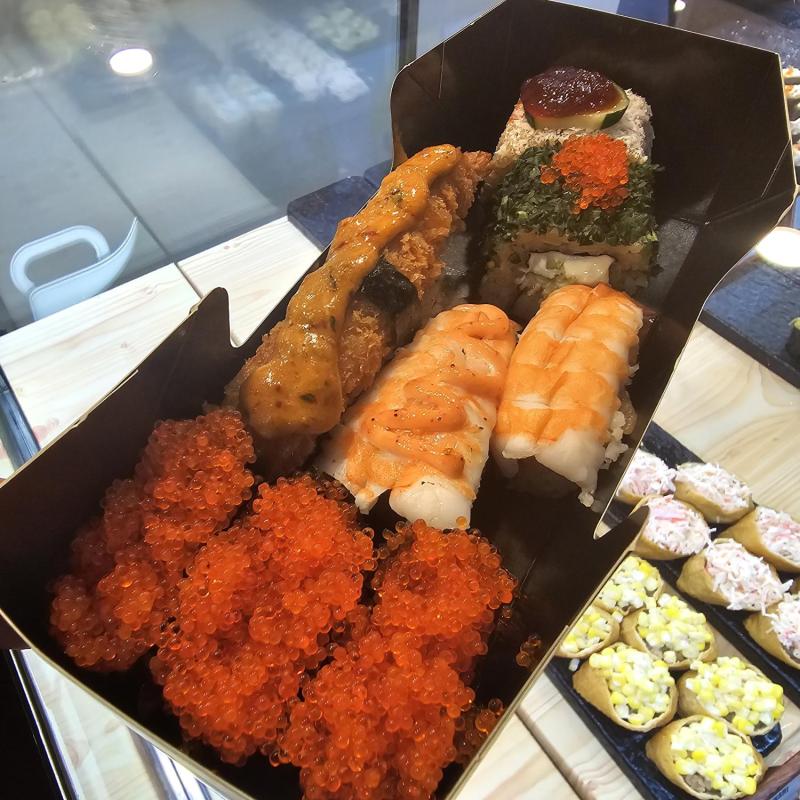
A good piece of sushi is quieter than it looks. Rice that is still faintly warm and lightly tangy, a slice of salmon cool enough to feel fresh, a thin brush of soy sauce, and a sharp lift of wasabi that clears the nose. It is meant to be eaten in one bite, and when it is done well, that bite is gone in seconds.
Sushi has become as much a part of Singapore's mall food courts and basement kiosks as it is of Tokyo's counters. For Muslim diners, though, the question usually comes before the first bite: is this actually halal? This guide explains what sushi is, why halal status is not as obvious as "it's just rice and fish", how the dish evolved over more than a thousand years, and where to find halal sushi across the island.
What Is Sushi?
Sushi is a Japanese dish made with vinegared rice, called shari, paired with toppings or fillings such as raw or cooked seafood, egg, vegetables or meat. The rice, not raw fish, is what defines sushi. It can be hand-pressed into small mounds (nigiri), rolled in seaweed (maki), wrapped into cones (temaki) or served in a bowl (chirashi).
Many people assume sushi means raw fish, but plenty of popular pieces are cooked: tamago (sweet omelette), unagi-style grilled eel, prawn tempura rolls, teriyaki chicken maki and inari (rice in a sweet tofu pouch). The thin slices of raw fish served on their own, without rice, are a related dish called sashimi.
Is Sushi Halal?
Fish and seafood are widely accepted as halal, so a salmon nigiri looks like an easy yes. The concerns lie in what you cannot see.
Mirin and sake in the rice and sauces
Sushi rice is seasoned with rice vinegar, sugar and salt, and in most Japanese kitchens also with mirin, a sweet rice wine made from glutinous rice, koji and shochu. Traditional mirin (hon mirin) contains around 14 per cent alcohol, which makes it unsuitable for Muslims. Ready-made sushi vinegar often contains it too. Mirin also turns up in teriyaki sauce, unagi glazes, takoyaki sauce and noodle dipping sauces, and sake, Japanese rice wine, appears in marinades and glazes.
The argument that the alcohol "cooks off" does not settle the matter. The concern is that a non-halal ingredient has been added to the dish, not only whether it can still intoxicate. In any case, mirin in sushi rice is usually stirred into rice that has already been cooked.
Halal-certified kitchens replace these with a sweetener mixed with alcohol-free rice vinegar, or with halal-certified mirin-style products that mimic the sweetness without the alcohol. If you cook Japanese food at home, look for the halal logo on the bottle: a label reading "mirin-style" or "aji-mirin" is not, by itself, a halal guarantee.
What about soy sauce?
Naturally brewed soy sauce contains a small amount of alcohol produced during fermentation. Many scholars and halal authorities distinguish this from mirin, because the alcohol is a by-product rather than an added intoxicating ingredient, but views differ. At a halal-certified restaurant, the soy sauce on the table forms part of the certified supply, so you do not need to work this out yourself.
Fillings, sauces and shared kitchens
Processed fillings such as crabstick, flavoured mayonnaise and ready-made sauces can contain non-halal ingredients or additives. Cooked items such as chicken and beef need halal-slaughtered meat. In non-halal restaurants, the same knives and boards may also handle non-halal food.
The practical answer: sushi itself can be completely halal, but you cannot judge it by looking. Eat at a halal-certified or Muslim-owned establishment, and look for the halal certificate on display where one applies. If you would like a refresher on the basics, our guide on what halal means is a good place to start.
A Short History of Sushi
Sushi began as a way to keep fish from spoiling. The earliest form, now called narezushi, involved packing salted fish in cooked rice and leaving it to ferment for months. The rice was discarded and only the fish was eaten. Food historians trace this preservation technique to Southeast Asia, from where it travelled through China to Japan alongside rice farming. In a sense, sushi's oldest roots lie not far from Singapore.
Over the centuries, Japanese cooks shortened the fermentation and began eating the rice too. By the Edo period (1603–1868), vinegar was being added to rice to give it a sour tang without waiting for fermentation, creating hayazushi, or "fast sushi".
The style most of us recognise today is credited to Hanaya Yohei, a sushi maker in Edo (present-day Tokyo), who is widely credited with developing hand-pressed nigiri around 1824. Instead of pressing fish and rice into boxes, he shaped each piece by hand to be eaten immediately. It was quick, cheap street food for the city's working people. Because the fish came from the bay in front of the city, this style became known as Edomae-zushi, "sushi from in front of Edo".
The next leap came in 1958, when Osaka restaurateur Yoshiaki Shiraishi opened Mawaru Genroku Sushi, the first conveyor belt sushi restaurant, after seeing bottles move along a factory conveyor. The format, known as kaiten-zushi, reached an international audience at the 1970 Osaka World Expo and later spread worldwide.
Sushi changed again abroad. The inside-out California roll, with rice on the outside to hide the seaweed from wary Western diners, emerged in North America around the 1960s and 1970s. Who invented it remains disputed, with claims centred on Los Angeles and Vancouver.
In Singapore, conveyor belt sushi became a mall staple, and halal versions followed. Hei Sushi, from the group behind Sakae Sushi, became one of the first halal-certified conveyor belt sushi restaurants here, opening the format to Muslim diners who had previously watched the plates go by elsewhere.
Types of Sushi You Will See in Singapore
Nigiri
A hand-pressed oblong of rice topped with a slice of fish or another topping, sometimes held with a thin band of seaweed. Salmon, tuna, prawn and tamago are the usual starting points.
Maki
Rice and filling rolled in a sheet of nori (dried seaweed) and cut into rounds. Thin rolls with a single filling are called hosomaki; thicker rolls with several fillings are futomaki.
Uramaki
The inside-out roll, with rice on the outside, often coated in sesame seeds or tobiko (flying fish roe). The California roll is the best-known example and a staple of Singapore chains.
Gunkan
Meaning "battleship", this is an oval of rice wrapped in a tall strip of nori, leaving room on top for loose toppings such as fish roe, corn mayo or chopped spicy salmon.
Temaki
A hand roll shaped into a cone, eaten with the fingers while the nori is still crisp.
Inari
Sushi rice stuffed into a pouch of sweet, seasoned fried tofu skin. Mild, slightly sweet and a good pick for children or anyone avoiding raw fish.
Chirashi
"Scattered" sushi: a bowl of sushi rice topped with an assortment of sashimi and garnishes. It sits between sushi and a Japanese rice bowl (don).
Aburi
Not a shape but a technique: the topping is briefly seared with a blowtorch, which softens the fish and adds a smoky, caramelised edge. Aburi salmon with mayonnaise is one of the most popular pieces at Singapore kiosks.
Sushi vs Sashimi
Sushi always includes vinegared rice. Sashimi is sliced raw fish or seafood served without rice, usually with daikon, shiso leaf, wasabi and soy sauce. If you prefer the fish on its own, browse places serving halal sashimi in Singapore.
Sushi with a Singapore Accent
Singapore rarely leaves a borrowed dish alone, and sushi is no exception. Local chains now roll in flavours from the hawker centre and beyond. At Super Sushi, you will find Nasi Lemak Maki with sambal and cucumber, Mala Chicken Maki with its numbing heat, Tom Yum Chicken Maki and a Beef Rendang Inari. Maki-San, meanwhile, lets diners build their own rolls from dozens of fillings, sauces and wraps.
Purists may raise an eyebrow, but these twists say something real about how Singaporeans eat: familiar flavours first, then curiosity. For many young diners, a rendang inari is their first step towards plain salmon nigiri.
What Makes Great Sushi?
- The rice comes first. Good shari is seasoned so you notice the gentle acidity, packed loosely enough to fall apart in the mouth and served close to body temperature rather than fridge-cold. Hard, dry or overly sweet rice is the most common flaw.
- Fresh, well-handled fish. Raw fish should look glossy and smell clean, never fishy. Slices should be cut neatly across the grain.
- Balance. The topping and rice should feel proportionate. Too much rice dulls the fish, while too little makes the piece fall apart.
- Crisp nori. Seaweed should snap, not chew. This is why temaki and maki are best eaten as soon as they are served.
- Restraint with sauces. Mayonnaise, cheese and sweet glazes are enjoyable, but they should complement the fish rather than bury it.
Condiments and What to Eat Alongside
- Soy sauce (shoyu): for dipping. Pour a little at a time; you can always add more.
- Wasabi: pungent green paste. Many sushi chefs place a dab between the rice and fish already.
- Gari: thin slices of pickled ginger, eaten between pieces to refresh the palate rather than piled onto sushi.
- Miso soup: a light soy bean broth often served with sushi sets. See where to find halal miso soup.
- Chawanmushi: a silky steamed egg custard that is a popular side at Japanese chains. Explore halal chawanmushi.
- Green tea: hot or cold, it pairs well with fish and is usually free-flow at conveyor belt restaurants.
For a full menu beyond sushi, browse all halal Japanese dishes on Halal Tag, from ramen to yakitori.
Where to Eat Halal Sushi in Singapore
Every establishment below is listed on Halal Tag as halal-certified or Muslim-owned. Certification is renewed periodically and outlets change, so check each listing and the certificate on site before you order.
Conveyor belt sushi
Hei Sushi brought the kaiten format to Muslim diners in Singapore and remains the best-known name for halal conveyor belt sushi. Expect a broad menu that goes well beyond sushi, with ramen, tempura and sashimi. Outlets include IMM in Jurong East, Sembawang Shopping Centre, Downtown East in Pasir Ris, Woodlands Civic Centre and the Sakae Building in Tai Seng.
Grab-and-go sushi kiosks
Super Sushi works like a pick-and-mix: you choose individual pieces to fill a box. It is the place for local fusion flavours such as Nasi Lemak Maki and Beef Rendang Inari, alongside classics like aburi spicy salmon and tuna mayo. Outlets are found in mall basements island-wide, including Tampines Mall, Jurong Point, Northpoint City, Eastpoint Mall, Sun Plaza, White Sands and ION Orchard.
Build your own rolls
Maki-San has run a DIY sushi concept since 2012. Pick a wrap (nori, soy paper or egg crepe), white or brown rice, fillings, toppings and a sauce, or order house rolls such as California Dreaming. With more than 20 outlets listed, from AMK Hub and Compass One to JEM and Parkway Parade, it is the easiest option for families and fussy eaters.
Omakase and special occasions
Sushi Airways in Kampong Glam serves sushi, sashimi and a multi-course omakase in a dining room styled like a vintage aircraft cabin. It suits birthdays and date nights, and its Bara Chirashi and Sashimi Moriawase are popular orders. Omakase means "I leave it to you": the chef chooses each course.
Sushi with a full Japanese menu
- GyoGyo: best known for grilled fish sets, with sushi rolls such as unagi and spicy salmon on the menu. Outlets at Funan, Plaza Singapura, VivoCity and JEM.
- The Ramen Stall: a Kampong Glam stalwart on North Bridge Road that serves California rolls and sushi alongside ramen and teppanyaki.
- Home of Sushi: on Joo Chiat Place, offering sushi with delivery available.
- Salmon Warrior: a salmon-focused Japanese spot at Suntec City.
- Daya Izakaya: a casual Japanese eatery on Jalan Kayu with sushi, rice bowls and ramen.
Hotel buffets with sushi counters
- Carousel at Royal Plaza on Scotts includes a halal-certified Japanese counter with sushi and sashimi.
- Atrium Restaurant at Holiday Inn Singapore Atrium on Outram Road features sushi and sashimi within a wide international spread.
For more spreads like these, see our guide to the best halal buffets in Singapore. Living in the east? Our guide to halal Japanese food in Tampines narrows things down further.
The full, community-ranked list lives on our halal sushi page, and you can find halal sushi near you wherever you are on the island.
A Visitor's Guide to Eating Sushi in Singapore
Sushi is not a Singaporean dish, but Singapore is an easy place for Muslim visitors to eat it without worry. Halal sushi chains sit in most large malls, often on basement food levels near MRT stations, and Kampong Glam has sit-down options within walking distance of Masjid Sultan.
How ordering usually works
- Conveyor belt restaurants: take plates from the belt; plate colour or pattern indicates price. Most outlets also let you order specific items by tablet or QR code.
- Kiosks: pick pieces with tongs into a box and pay at the counter. Ideal for a quick meal or a snack on the move.
- Sit-down restaurants: order à la carte, sets or omakase.
Useful terms
| Term | Meaning |
| Shari | Seasoned sushi rice |
| Neta | The topping on nigiri |
| Nori | Dried seaweed sheet |
| Sake (salmon) / Shake | Salmon. Note: "sake" written with a different character also means rice wine, a common source of confusion |
| Maguro | Tuna |
| Ebi | Prawn |
| Tamago | Sweet omelette |
| Unagi | Freshwater eel, usually grilled with a sweet glaze |
| Tobiko / Ebiko | Small fish roe, often orange |
| Aburi | Torch-seared |
| Omakase | Chef's choice menu |
A few etiquette tips
- Nigiri is meant to be eaten in one bite, with fingers or chopsticks.
- Dip the fish side lightly in soy sauce rather than soaking the rice, which falls apart.
- Eat gari between pieces, not on top of them.
- At a counter, it is polite not to leave sushi sitting for long, as the chef prepares it to be eaten straight away.
What to expect: halal sushi in Singapore tastes much like sushi anywhere. Without mirin, some diners notice the rice is slightly less sweet. Local chains also lean towards cooked, creamy and spicy options, so ask for plain nigiri or sashimi if you want a cleaner taste of the fish.
Sushi and Nutrition
Sushi can be a lighter meal, but it depends on what you choose. The figures below are approximate estimates only; actual values vary with portion size, rice quantity and toppings.
- Nigiri: roughly 40 to 65 kcal per piece, mostly from the rice.
- Simple maki: roughly 25 to 50 kcal per piece.
- Sashimi: roughly 30 to 40 kcal per slice, with almost no carbohydrate.
- Rolls with tempura, cheese or mayonnaise: can be considerably higher.
Oily fish such as salmon provides protein and omega-3 fats. Soy sauce is high in sodium, so dip lightly, and fried or heavily sauced rolls add fat and calories. If you are pregnant, very young, elderly or have a weakened immune system, it is sensible to check with your doctor about raw seafood; cooked options such as tamago, inari, prawn and teriyaki chicken rolls are widely available.
Interesting Facts About Sushi
- The oldest sushi was not really about the rice at all. In narezushi, the fermented rice was thrown away and only the preserved fish was eaten.
- Hanaya Yohei's early nigiri were reportedly larger than the bite-sized pieces served today.
- "Edomae" refers to the waters of what is now Tokyo Bay, where early nigiri toppings were caught.
- Conveyor belt sushi was born partly out of a staffing shortage: its inventor wanted to serve more customers with fewer workers.
- The California roll travelled back to Japan, where it is sometimes called kashu maki.
- Salmon, now the most popular sushi topping in Singapore, was not traditionally used for raw sushi in Japan. Its rise is a relatively modern development.
Frequently Asked Questions
Is sushi halal?
Sushi can be halal, but not automatically. The fish is generally permissible, but sushi rice and sauces are often seasoned with mirin or sake, which contain alcohol. Eat at halal-certified or Muslim-owned establishments to be sure.
Is sushi rice halal?
Plain rice seasoned with vinegar, sugar and salt is halal. The concern is mirin, a sweet rice seasoning containing alcohol, which some kitchens add. Halal-certified kitchens use alcohol-free alternatives.
Is mirin halal?
No. Traditional mirin contains around 14 per cent alcohol and is not considered halal, even when cooked. Halal-certified mirin-style seasonings, or a mix of sweetener and alcohol-free rice vinegar, are the usual substitutes.
Is soy sauce halal?
Naturally brewed soy sauce contains trace alcohol from fermentation. Many scholars consider it permissible because the alcohol is a by-product, though opinions differ. Soy sauce at halal-certified restaurants is part of their certified supply.
What is the difference between sushi and sashimi?
Sushi is always made with vinegared rice. Sashimi is sliced raw fish or seafood served without rice.
Is all sushi raw?
No. Many popular pieces are cooked, including tamago, inari, prawn tempura rolls, grilled eel and teriyaki chicken rolls.
What is the difference between nigiri and maki?
Nigiri is a hand-pressed mound of rice topped with a slice of fish or another topping. Maki is rice and filling rolled in seaweed and cut into rounds.
Where can I find halal conveyor belt sushi in Singapore?
Hei Sushi operates halal-certified conveyor belt restaurants at several locations, including IMM and Sembawang Shopping Centre. Check its Halal Tag listing for current outlets.
Is there halal omakase in Singapore?
Yes. Sushi Airways in Kampong Glam offers an omakase menu alongside its à la carte sushi and sashimi.
What should first-timers order?
Start with salmon nigiri, a California roll, tamago and an aburi salmon piece. They cover raw, cooked, sweet and seared in four bites.
Find Your Next Sushi Spot
Sushi has travelled a long way, from fermented fish packed in rice, to Edo's street-side nigiri, to a Nasi Lemak Maki in a Tampines basement. What has stayed constant is the rice: seasoned with care, shaped with intent and eaten fresh. For Muslim diners in Singapore, the good news is that you no longer have to choose between enjoying sushi and eating with peace of mind.
Browse the full list of halal sushi in Singapore on Halal Tag, and if your favourite spot is missing, recommend it to the community. Your tip could be the next diner's best meal of the week.