
Halal Chicken Rice in Singapore: The Complete Guide to the Island's Favourite Plate
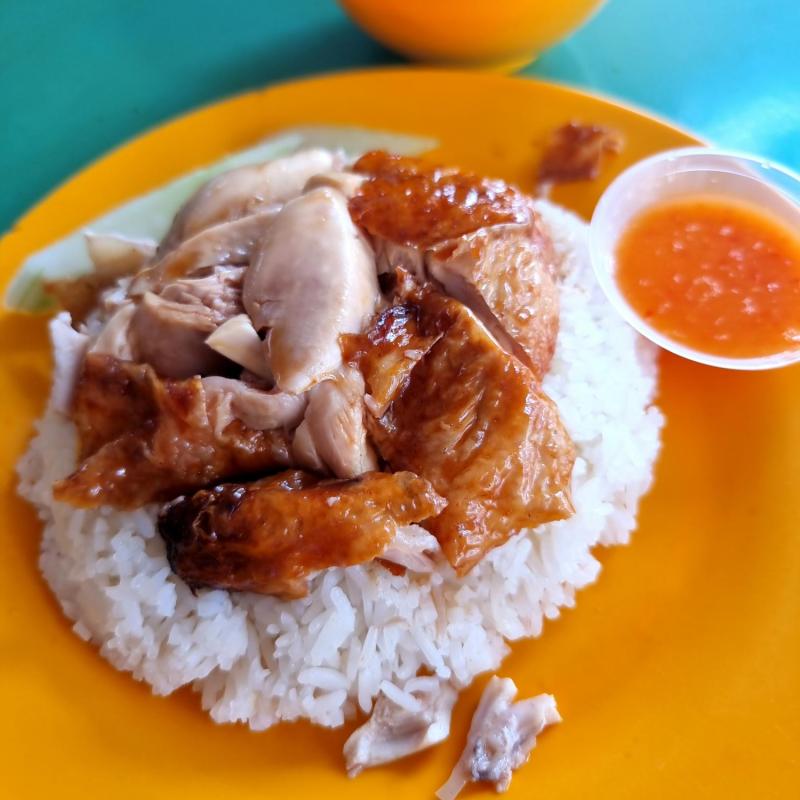
A plate of chicken rice looks almost too plain to be famous. A few slices of pale, glistening chicken. A dome of rice. Some cucumber, a saucer of chilli, a small bowl of soup. Then you take the first spoonful, and the rice tells you everything: glossy, savoury and perfumed with garlic, ginger and pandan, every grain separate.
Chicken rice is often described as one of Singapore's national dishes, and you will find it almost everywhere, from hawker centres and kopitiams to food courts, airport terminals and hotel coffee houses. For Muslim diners, there is a long and growing list of halal stalls and restaurants serving it too. This guide covers what chicken rice is, where it came from, the styles you will meet, what separates a great plate from an ordinary one, and where to find halal chicken rice in Singapore.
What Is Chicken Rice?
Chicken rice is a Singaporean dish of poached or roasted chicken served with rice cooked in chicken stock and chicken fat, flavoured with garlic, ginger and pandan leaves. It is eaten with chilli sauce, ginger paste and dark soy sauce, and usually comes with cucumber slices and a bowl of light chicken soup.
It is commonly called Hainanese chicken rice, after the immigrants from Hainan Island in southern China who brought an early version of it to Singapore. In Malay it is nasi ayam; in Thailand, a close cousin goes by khao man gai.
What makes the dish distinctive is that the rice matters as much as the chicken. Many regulars will tell you they choose a stall for its rice first and its chicken second.
A Short History of Chicken Rice in Singapore
From Wenchang to the Nanyang
Singapore's chicken rice is believed to have evolved from Wenchang chicken, a celebrated dish from Hainan. Hainanese immigrants who moved to South-east Asia in the 19th and early 20th centuries brought the recipe with them and adapted it over time. In Singapore, Wenchang chicken rice remained a dish for special occasions in Hainanese homes until around the 1940s.
Bamboo baskets on Purvis Street
The dish moved from home kitchens to the street through hawkers such as Wong Yi Guan, who sold chicken rice around the Beach Road area in the 1930s and 1940s, carrying his food in two bamboo baskets balanced across his shoulders. The Hainanese quarter around Middle Road, Purvis Street and Seah Street became the dish's first home. Some of the earliest chicken rice businesses, including Yet Con, Chin Chin Eating House and Swee Kee, opened there in the 1930s and 1940s. Swee Kee was founded by Moh Lee Twee, who had learned the trade under Wong.
The Cantonese touch
The chicken rice Singapore eats today is not identical to the Hainan original. The Wenchang chicken is a bony, muscular free-range bird. Cooks in Singapore borrowed from Cantonese white-cut chicken, switching to younger, more tender birds and plunging them into iced water after cooking. That one change gives the smooth skin and thin layer of jelly underneath that local diners now expect.
In March 2019, chicken rice was added to Singapore's inventory of intangible cultural heritage, which notes that halal versions are part of how the wider community enjoys the dish.
How Chicken Rice Is Made
The chicken
For the classic poached version, whole chickens are dipped in and out of boiling stock to tighten the skin, then left to cook gently in the stock. Afterwards they are either rested in room-temperature water or shocked in iced water, then hung to drip before being chopped. Despite the name "steamed chicken" on many menus, the bird is almost always poached.
The rice
This is the hardest part to get right. Raw rice is fried in rendered chicken fat with garlic and ginger, then cooked in the stock skimmed from the poaching pot, with pandan leaves added for fragrance. One veteran Hainanese cook interviewed for the national heritage inventory says the grains need to be between three and six months old, and that the 20-minute cook demands constant attention to the heat.
The sauces
The chilli sauce is built from fresh chillies, garlic, ginger and chicken stock, and many stalls sharpen it with lime. It sits alongside pounded ginger and thick, sweet dark soy sauce. Mixing a little of each over the rice is part of the ritual.
Styles of Chicken Rice You Will Find
| Style | How the chicken is cooked | What to expect | Try it at |
| Poached ("steamed" or "white") | Poached in stock, then cooled | Silky, delicate, served at room temperature | Edmond Chicken Rice |
| Roasted | Seasoned, air-dried, then deep-fried or roasted | Crisp, darker skin, more savoury | Sam Leong St Chicken Rice |
| Boneless | Either style, deboned before serving | Easy eating, popular with families | Ding's Hainanese Boneless Chicken Rice |
| Malay-style nasi ayam | Poached, roasted or fried | Bolder sambal chilli, sometimes spiced or coloured rice | Jefri The Original Botak Chicken Rice |
| Thai khao man gai | Poached | Fermented soybean and chilli dip, lighter rice | Go-Ang Pratunam Chicken Rice |
Two more styles are worth knowing. Soya sauce chicken rice, the Cantonese style, braises the bird in a dark sauce with cinnamon, clove and rock sugar; it is harder to find in halal form. Chicken rice balls, an early version in which the rice was pressed into balls by hand while still warm, are now seldom seen in Singapore. If you know a halal stall still serving either, recommend it on Halal Tag.
What Makes a Great Plate of Chicken Rice?
Judge the rice first. It should be fragrant before you taste it, each grain distinct, rich without leaving a film of oil on your spoon. Rice that clumps or tastes only of salt is the clearest sign of a shortcut.
For poached chicken, look for smooth, taut skin with a thin layer of jelly beneath, and meat that is moist right through to the breast. Roasted chicken should have crisp, well-seasoned skin rather than a hard crust. The chilli should balance heat, acidity and garlic, and the soup should taste of chicken rather than stock powder. A good stall gets all four right on an ordinary weekday, not just on a good day.
Side Dishes and Accompaniments
Chicken rice is often ordered as part of a small spread. Common sides include braised eggs in dark soy, braised tofu, blanched beansprouts or kailan with oyster sauce, and achar, a tangy pickle of cucumber, carrot and cabbage with crushed peanuts. Some stalls go further: Sam Leong St Chicken Rice lists braised eggs, chicken liver, fried wings and a ginseng chicken soup. To drink, a cold lime juice or barley water cuts through the richness.
Where to Find Halal Chicken Rice in Singapore
Halal Tag lists more than 60 places serving chicken rice. The ten below cover a range of styles and neighbourhoods. Outlets change, so check each listing before you go, and look for halal signage at the stall itself. For the full list, browse halal chicken rice on Halal Tag or find halal chicken rice near you.
City and Little India
- Hai Ge Ji Hainanese Chicken Rice (Bussorah Street). A restaurant devoted to chicken rice, started by local rapper Sheikh Haikel and his wife, Anna Belle Francis. The name is a play on his.
- Mackenzie Rex Restaurant (Prinsep Street). Serving Hainanese chicken rice and zi char dishes since 1966, and known for its roasted chicken and punchy chilli.
- Sam Leong St Chicken Rice (Verdun Road, Little India). Started as a hawker stall in 1992 and now a modern eatery serving both poached and roasted chicken rice with a long list of sides.
West and South
- Evertop Family Restaurant (Clementi and Joo Chiat). A neighbourhood favourite with outlets near Masjid Darussalam in Clementi and on Joo Chiat Road. Also serves roasted duck noodles.
- Edmond Chicken Rice (Tanglin Halt and Telok Blangah). A hawker stall with two market outlets; the drumstick chicken rice is the regular order.
- Ding's Hainanese Boneless Chicken Rice (Seah Im Food Centre). A convenient stop near HarbourFront for boneless chicken rice before or after a trip to Sentosa.
East and North
- Jefri The Original Botak Chicken Rice (Bedok Interchange Hawker Centre). Known for orange-hued rice fried with sambal and tomato paste, which gives a sweet, gently spicy plate unlike the Hainanese classic.
- OK Chicken Rice (Ang Mo Kio and Tampines). A no-frills, wallet-friendly option for an everyday plate.
Islandwide
- Fitra Chicken Rice. Found in food courts across the island, including Jewel Changi Airport, Bugis Junction and VivoCity. Serves both roasted and steamed chicken rice, plus drumstick sets and chicken dumpling soup. A reliable choice for visitors.
- Go-Ang Pratunam Chicken Rice. The Singapore branch of a Bangkok stall dating to 1960 and recognised with a Michelin Bib Gourmand, serving Thai-style khao man gai with its house chilli.
Want something else on the same plate? Explore halal duck rice or browse all halal Chinese food.
A Visitor's Guide to Ordering Chicken Rice
If you are visiting Singapore, chicken rice is one of the easiest local dishes to start with. It is mild, filling and served almost everywhere: hawker centres, mall food courts and the airport. Singapore's hawker culture was inscribed on UNESCO's Representative List of the Intangible Cultural Heritage of Humanity in 2020, and a plate of chicken rice is a good introduction to it.
A few terms help at the counter:
- Steamed or roasted? The stallholder's first question. "Steamed" means poached.
- Drumstick: a plate built around a whole chicken leg, usually a little more expensive.
- Set: often adds soup, vegetables or an egg.
- Half or whole chicken: for groups sharing, with rice ordered by the plate.
- Nasi ayam: the Malay name, common on menus at Malay-run stalls.
At hawker centres and food courts, halal and non-halal stalls often sit side by side, so check each stall rather than the venue as a whole. Halal Tag's listings help you find the right one, and our guide to what halal means explains the basics.
Chicken Rice Nutrition
According to a dietitian-reviewed guide from KK Women's and Children's Hospital, a 382 g plate of roasted chicken rice with skin and chilli contains about 607 kcal, 25 g protein, 23 g fat (8.7 g saturated), 75 g carbohydrate and 1,287 mg sodium. That sodium figure is more than half an adult's daily allowance. These are estimates; portions, rice and cooking oil vary between stalls.
To lighten the plate, the same guide suggests removing the chicken skin, asking for plain white rice instead of chicken rice, adding extra cucumber and going easy on the soy sauce.
Interesting Facts
- Roasted often means fried. For the roasted version, the whole chicken is seasoned with salt and pepper, hung to dry and then deep-fried rather than oven-roasted.
- It flies. Chicken rice appears on selected Singapore Airlines menus as a taste of Singapore.
- It travels under a new name. In Western countries, the dish is sometimes known simply as "Singapore chicken rice".
- Chefs keep reinventing it. The flavour has turned up as chicken rice risotto, chicken rice sushi and even chicken rice-flavoured potato chips.
Frequently Asked Questions
Is chicken rice halal?
Not automatically. The ingredients are naturally halal-friendly, but it depends on how the chicken is sourced and prepared at each stall. Use Halal Tag to find halal chicken rice and check the stall's halal signage.
What is the difference between steamed and roasted chicken rice?
Steamed chicken is poached and cooled for silky, delicate meat. Roasted chicken is seasoned, dried and fried or roasted for crisp, darker skin. The rice and sauces are usually the same.
Why is it called Hainanese chicken rice?
The dish was brought to Singapore by immigrants from Hainan Island in southern China and is based on Hainan's Wenchang chicken.
Is chicken rice Singapore's national dish?
It is widely described as one of Singapore's national dishes, though the title is informal. It is listed in Singapore's intangible cultural heritage inventory.
What sauces come with chicken rice?
Usually chilli sauce, pounded ginger and dark soy sauce. Mix a little of each into the rice.
Is chicken rice spicy?
No. The chicken and rice are mild; the heat comes from the chilli sauce on the side, so you control it.
How many calories are in a plate of chicken rice?
About 607 kcal for a 382 g plate of roasted chicken rice, according to KK Women's and Children's Hospital. Actual figures vary by stall and portion.
How is chicken rice different from khao man gai?
Both descend from Hainanese immigrant cooking. Thai khao man gai is usually served with a fermented soybean chilli dip, while Singapore chicken rice comes with chilli, ginger and dark soy.
Where can I find halal chicken rice near me?
Use Halal Tag's chicken rice near me page to see halal options closest to you.
Conclusion
Chicken rice proves that simple food is rarely easy. A good plate rests on details most diners never see: the age of the rice, the timing of the poach, the balance of the chilli. It began in Hainanese homes, reached the street in bamboo baskets and is now one of the dishes Singapore is best known for.
Whether you prefer yours poached, roasted, boneless or with a fiery sambal, there is a halal plate waiting for you. Browse halal chicken rice on Halal Tag, and if your favourite stall is missing, recommend it so the community can find it too.